Antique Dishes
Antique dishes and plates and their non-specific age signs
This applies specifically for Ming dynasty porcelain, which sometimes shows very clear age signs.
As mentioned before, some characteristics that can be used for judging the age
of antique porcelain are not age signs in the sense of
material aging. These age characteristics are the result of the
production methods or handling techniques in the distant past. They are age signs which are non-specific to the aging process of the material (porcelain) itself; they are rather indicative of the production environment at the time items were made.
Glaze contractions and spots where the glaze or slip does not cover the
clay were mentioned earlier. In addition to this "warping" or
"deformation" is shown in the pictures below. These developed mainly in
common dishes, plates or bowls, and are quite frequently found in items
of the Ming dynasty.
Such deformations would usually develop before the initial firing, which
was to stabilise the shape of an item before decoration, after which
the items would be fired for a second time. Some thrown items were
simply too soft and got deformed, either because of undue pressure
applied during handling after they were removed from the wheel, or just
because the clay was too soft and the edges changed shape under their
own weight.
Examples of rim deformation:
Dishes of the Ming dynasty
These dishes show quite severe warping. The warping developed before the initial firing, which was to give the items strength.
The reason can be improper (too forceful) handling or lacking strength of the clay itself. Only the initial firing gives enough strength to ensure that no deformation can occur.
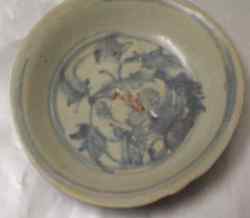 | Ming Zhengde dish (top view) |
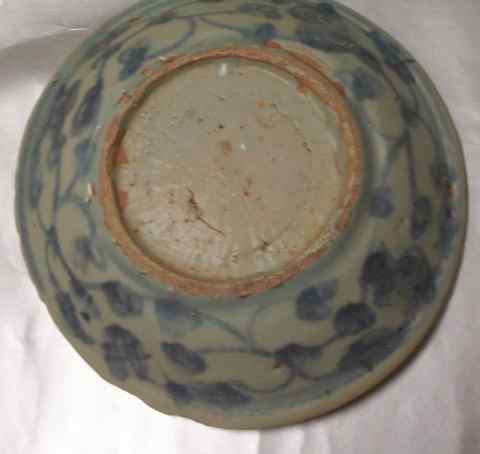 | (back view) |
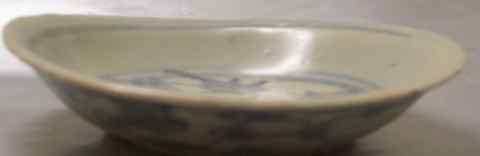 | (side view) |
Another example of a deformed dish: | |
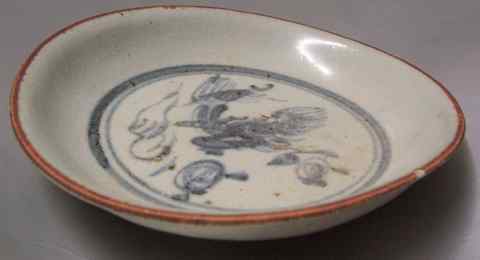 | Warped Ming dynasty dish |
Return to Porcelain Age signs
Return from Antique dishes to Antique Chinese Porcelain Home Page
| About | Queries | Disclaimer | Privacy Policy | Sitemap | Sponsorship Policy |
