Home
NEW Marks Book
Blog
.............................. Glossary
Marks
Authentication
Porcelain Age Signs
Buying Antiques
Reproductions
Fake Antiques
China Trade
Cyclic Calendar
Chronology
Ming-Qing Emperors
Porcelain Repair
Major Collections
Image Gallery
............................... Antiques News
Search
Sitemap
............................... Contact
About
Privacy Policy
................................
[?] Subscribe To This Site

XML RSS
Add to Google
Add to My Yahoo!
Add to My MSN
Subscribe with Bloglines

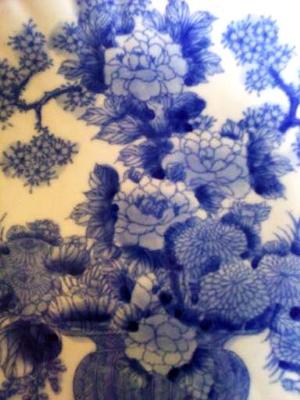
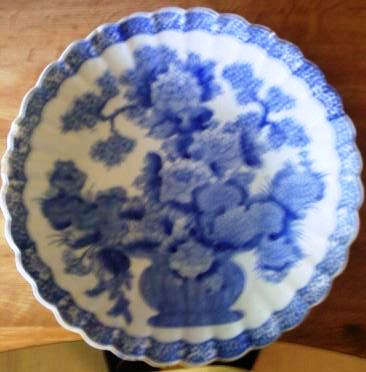
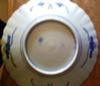
New Upload of Pictures of Grandma's Blue Plate
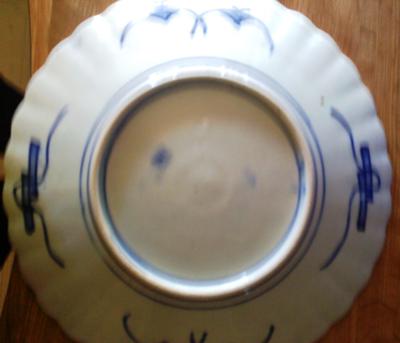
the back
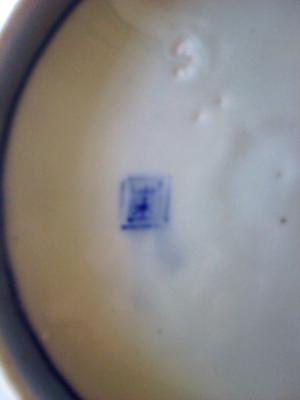
the back

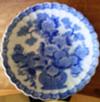
the back the mark detail of the front full view of the front

The admin for the site said the pictures were blurry and I apologize. I hope these turn out better. This is just one piece of many that my grandmother gave me. No one knows how she acquired it, but she was known to frequent asian art dealers in San Francisco and purchase things of interest to her (not necessarily antique or of value). Any help or tips as to how to research is appreciated.

Comments for
New Upload of Pictures of Grandma's Blue Plate

Click here to add your own comments

blue and white plate
by: peter

Hello,
I will have a try at this.
The bottom picture looks as if it had some age to it, but from the photographs it is difficult to tell how old. The mark is smeared a bit and it is difficult to tell what character is in it. It is unlikely that the decoration is Chinese. Firstk I was thinking it is Chinoiserie (early European porcelain imitations of Chinese patterns), but after looking at these pictures I lean more towards Japanese for the following reasons:

1. In an antique Chinese clobbered plate the width between the recesses is normally narrower and less pronounced.
2. Chinese painting is usually more stylistic, what we have here is a very realistic painting of peonies, chrysanthemums, etc.
3. The decoration on the underside shows bats and scrolls which would be standard for Chinese porcelain, but some Chinese motifs have been used by Japanese porcelain makers too...
4. The glaze on the bottom seems to have some age.
5. The mark is shifted away from the center. Very unusual for Chinese, but the Japanese are more given to experiment with such things.
6. I am not sure bout this but it looks as if the blue color inside the foot rim is painted upwards on the vertical part of the rim? If that is the case, this is another point that makes it likely to be Japanese.

I have only peripheral knowledge of Japanese porcelain, so would recommend you ask at asianart.com. They may be in a better position to help with such items.

Click here to add your own comments

Join in and write your own page! It's easy to do. How?
Simply click here to return to Ask a Question or Contribute to the


footer for antique Chinese porcelain page