logo for chinese-antique-porcelain.com
Home
Blog / Forum
Glossary
.............................. Ancient China Trade
Image Gallery
Marks
Authentication
Cyclic Calendar
Chinese Calendar
History timeline
Ming-Qing Emperors
Major Collections
Porcelain Age Signs
Reproductions
Fake Antiques
Buying Antiques
Value of Antiques
............................... E-Book
Porcelain Care
China Repair
............................... Chinese Zodiac
Chinese Tea Culture
Search
Sitemap
............................... Privacy Policy
Contact
About

[?] Subscribe To This Site

XML RSS
Add to Google
Add to My Yahoo!
Add to My MSN
Subscribe with Bloglines

LEFT for chinese-antique-porcelain.com

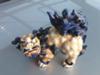
LARGE PORCELAIN SHISHI

by Andrew

Hi Pete,
have this very large & heavy porcelain figurine of a shishi, I've compared it to genuine imari porcelain & it has the same paste & glazes.
Read somewhere that gold 'mud'was used as guilding & not the modern bright guilding used today..this exhibits the mud type guilding in places.
Question is it Imari, & about how old?
Been told this is recent also!, if that's the case then my imari plates must be good fakes also.

any comments welcome.
regards, Andrew.

Comments for
LARGE PORCELAIN SHISHI

Click here to add your own comments

Mar 28, 2011
SHISHI
by: Andrew

Hello Peter,
thanks for the additional info, will add it to my humble arsenal of knowledge.
regards, Andrew.

Mar 27, 2011
holes
by: peter

Hi Andrew,
Depends on the size whether holes are needed or not.
It is not needed if it is small. I have seen Shishi (don't know why they call them Foo Dogs in the west) that were maybe 50cm long, small ones are perhaps 10cm.

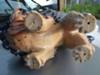
Actually, I thought it a bit odd that there are holes are in the feet. The legs are not that wide. However, if they are connected to the interior of the body, then that would clarify why the holes are needed. The hot air must be able to escape from the interior during the firing process.
However, with Chinese figurines, for example, the bottom would usually be fully open.
In Japanese items it seems that the bottom is closed, with a small hole in center, like those in this item.

Mar 27, 2011
Shishi
by: Andrew

Thanks Pete,

The piece is very thick walled & handmade.
Does not appear to be hollow slip cast.
I've been told for a fact that small holes are needed in porcelain models, not all, to allow for air/temperature expansions, so that piece does not explode or crack in the kiln during firing & cooling.
this piece does have some surface crack fissures, not too deep.
However the holes in the base of the feet are all slightly different, but most are about 3 mm.s in diameter & up to about 5 mm.s deep!...don't know what purpose these holes served...all seem to have been pressed into the paste by hand before firing.

regards to you all,
Andrew.

Mar 27, 2011
shishi
by: peter

Hi Andrew,
Never saw something like this. The two or three kilns of which I know could have made this type of figures all seem unlikely to have made them. The bumps are more like those I have seen in Japanese craft. Also, the overall appearance is that of something newer. The can still be collectible, due to the quality of work.

As I have no knowledge about this sort of item, I would like to abstain from giving an opinion. Just keep all possibilities open. The future may show what it is, actually.
Please look at the small holes at the bottom. I also know of Japanese figurines using such small holes as they are present in the feet.
While the item may be typical Chinese, you should remain aware that Japan did make a lot of imitations of Chinese wares. They even copied Chinese motifs and marks at times.

Click here to add your own comments

footer for antique Chinese porcelain page