Dated Porcelain
Dated
porcelain comes more often than not in the form of a dedication or
verse on the outer circumference or on the lid of a porcelain vessel.
The date is usually in the form of a cyclic calendar year, often
accompanied with the season or moon (lunar month).
We do not not
know for sure if this application of a signature or date was used to
any greater extent during the 18th century. Only the Yongzheng reign is
known for blue and white porcelain with text like this later type of
polychrome porcelain. However, adding a cyclic date clearly became more
frequent towards the later 19th century. This coincided with increased
popularity of Qianjiang style of porcelain painting, a style which was
accurately mimicking traditional Chinese painting.
From then on,
more and more porcelain painters were affixing their signature or seal
to their works. Apparently a transition from a mere kiln worker to an
artisan or porcelain painting artist was in progress. Increasing numbers
of porcelain painters were making a name of their own in this art.
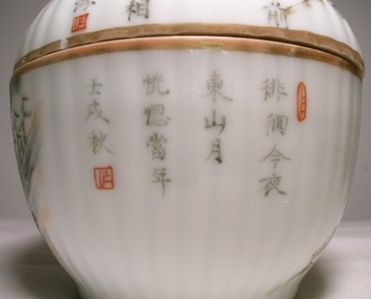
The
fluted bowl in the picture above has three characters in the last
vertical column on the left. A red seal is affixed below these. The
first two characters represent the cyclic date corresponding to either
1862 or 1922 (see 60 year cyclic calendar), and the last means "autumn".
The decoration style and other factors allow then to select the most likely date/year of production.
However, please be aware that fakes also may use the cyclic date, in
this case a false one, to mislead a potential buyer. It cannot be
emphasized enough that as with marks it is not possible to solely rely
on a cyclic date on signed porcelain. Always take all aspects into
account when identifying the age of porcelain.
Back to Porcelain Marks
Go from Dated Porcelain to Home
| About | Queries | Disclaimer | Privacy Policy | Sitemap | Sponsorship Policy |
